Search Results for "fc 26 coins Buyfc26coins.com is EA Sports official for FC 26 coins The transfer time was very fast..ujWi"
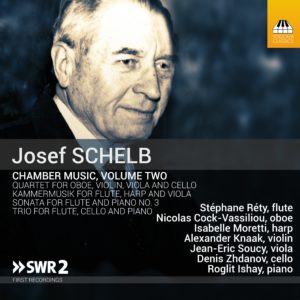
Josef Schelb: Chamber Music, Volume Two
The Karlsruhe-based Josef Schelb (1894–1977) is one of the better-kept secrets of twentieth-century German music. His output was substantial: he lost most of his early music in a bombing raid in 1942, but – as if to make up for lost time – wrote some 150 more works after that. In the four chamber works recorded here Schelb’s contrapuntal mastery is given a bucolic twist under the influence of French Impressionism, the two traditions combining to invest these pieces with a freewheeling energy and downright sense of fun.
Stéphane Réty, flute (Tracks 1-9)
Nicolas Cock-Vassiliou, oboe (Tracks 10–12)
Isabelle Moretti, harp (Tracks 1–3)
Alexander Knaak, violin (Tracks 10–12)
Jean-Eric Soucy, viola (Tracks 1–3, 10–12)
Denis Zhdanov, cello (Tracks 7–12)
Roglit Ishay, piano (Tracks 4–9)
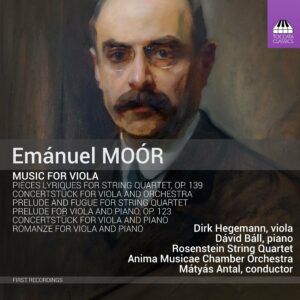
Emánuel Moór: Music for Viola
The works of Emánuel Moór (1863–1931) ought to be celebrated as among the major achievements of Romantic music, but because of Moór’s peripatetic life – he was born in Hungary, studied in Vienna (with Bruckner), performed in the US and across Europe, became a UK citizen and settled and died in Switzerland – no country has claimed and promoted him to the degree he deserves. Moór’s musical language offers a deeply satisfying blend of contrapuntal mastery and ardent lyricism, as the works on this album – written for or involving the viola – demonstrate. In time he will be recognised as one of the masters of his age.
Dirk Hegemann, viola
Dávid Báll, piano (Tracks 3, 8, 9)
Rosenstein String Quartet (Tracks 1–2, 4–7):
Michael Hsu and SooEun Lee, violins
Dirk Hegemann, viola
Markus Tillier, cello
Anima Musicae Chamber Orchestra (Track 10)
Mátyás Antal, conductor (Track 10)
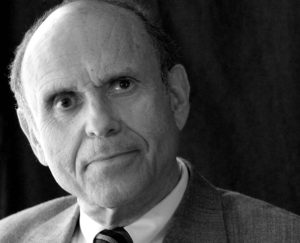
Happy Collaborations — Samuel Adler: Music for Chamber Orchestra
Several years ago, through a mutual acquaintance, I met Dongmin Kim, the conductor of the New York Classical Players, and we immediately felt a kinship.…
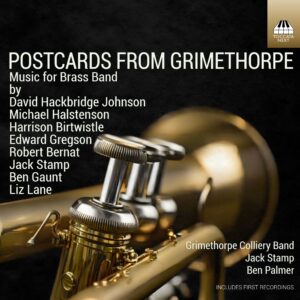
Postcards from Grimethorpe: Music for Brass Band
When the American composer Jack Stamp was appointed International Composer-in-Association to the Grimethorpe Colliery Band in 2019, he conceived a recording project focused on works specifically written for the GCB, including compositions by himself and Liz Lane, the other GCB Composer- in-Association, alongside other pieces which have played a prominent role in the Band’s recent activities. The kaleidoscopic range of styles to be heard here displays the extraordinary virtuosity of one of the world’s best-known brass bands.
Grimethorpe Colliery Band
Jack Stamp, conductor
Ben Palmer, guest conductor
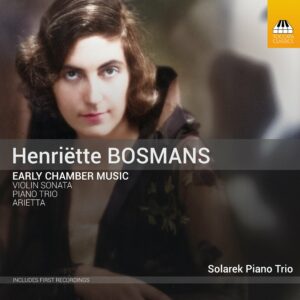
Henriëtte Bosmans: Early Chamber Music
The three works by the Amsterdam-born Henriëtte Bosmans (1895–1952) in this album all date from her early to mid-twenties. The Violin Sonata and Piano Trio are substantial pieces, both animated by the passion of youth – and, given their quality, it is astounding that they should be receiving their first recordings here. At this stage in her life Bosmans was still writing in an expansive, Romantic style, although echoes of French Impressionism, Spain and the Middle East can often be heard – and from time to time the Violin Sonata nods to Bach and Reger.
Solarek Piano Trio
Marina Solarek, violin
Miriam Lowbury, cello
Andrew Bottrill, piano

¡Colombia Viva! Volume Two
With this second volume of ¡Colombia Viva! – a series capable of infinite expansion, as is indeed intended – Mauricio Arias-Esguerra embarks on another lightning tour of the recent piano music of his native country, displaying the wide variety of styles on offer there, from atmospheric modernism to catchy folk dances, a recurrent element being striking rhythmic vivacity.
Mauricio Arias-Esguerra, piano
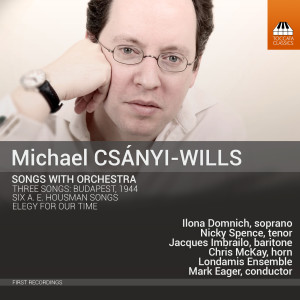
Michael Csányi-Wills: Songs With Orchestra
These orchestral songs by the English composer Michael Csányi-Wills (b. 1975) all deal with the subject of loss. In Three Songs – Budapest, 1944 Csányi-Wills uses documentation from his own family history to shadow the fate of Hungary’s Jews under the Nazis. Mortality is an omnipresent theme in A. E. Housman’s Shropshire Lad poems. And Elegy for Our Time sets an anguished lament by Jessica d’Este, sparked by the death of her granddaughter in a car crash. Csányi-Wills responds to the stimulus of these dark texts with music that is hauntingly lyrical and elegiac.
Ilona Domnich, soprano
Nicky Spence, tenor
Jacques Imbrailo, baritone
Chris McKay, horn
Londamis Ensemble
Mark Eager, conductor
First recordings
In Handel’s Shadow: Vocal Music by his Rivals in 18th-Century London
The figure of George Frideric Handel cast a long shadow over musical London in the first half of the eighteenth century, condemning many of his contemporaries – fine composers themselves – to long years of obscurity. This recording throws light into forgotten corners and discovers some glittering gems, some of them demanding dazzling vocal fireworks from their performers. Several of these composers set scenes from Classical mythology or Old Testament narratives – but they also explore the underside of the Baroque psyche in one of David’s darkest psalms and in a representation of Arcadian madness.
Lux et Umbrae
Robert Crowe, soprano and artistic director
Annette Fischer, soprano
Julia Nilsen-Savage, cello
Sigrun Richter, archlute
Michael Eberth, harpsichord
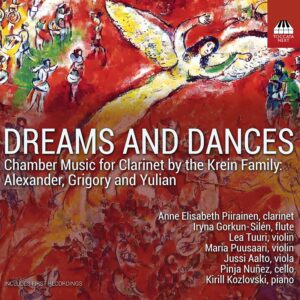
Dreams and Dances: Chamber Music for the Clarinet by the Krein Family
The Krein family, with its origins in Lithuania, became a musical dynasty of considerable importance in Imperial and then Soviet Russia. The seven sons of its patriarch, Abram Krein, were all musicians, with Alexander and Grigory becoming respected composers, and Grigori’s son, Yulian, adding another generation of Krein compositions. The dances and cantillation of their Jewish background was an important part of their musical make-up, combining at various stages with Russian folk-music, Skryabinesque harmony and French Impressionism. All three shared a predilection for the clarinet, developing a repertoire for the instrument that is only now beginning to be discovered – in what one might call a Krein scene investigation.
Anne Elisabeth Piirainen, clarinet
Iryna Gorkun-Silén, flute (tracks 4–6)
Lea Tuuri, violin (Tracks 1, 2, 9–11, 14–16)
Maria Puusaari, violin (Tracks 1, 2, 9–11)
Jussi Aalto, viola (Tracks 1, 2, 9–11)
Pinja Nuñez, cello (Tracks 1, 2, 9–11, 14–16)
Kirill Kozlovski, piano (Tracks 3–8, 12–16)
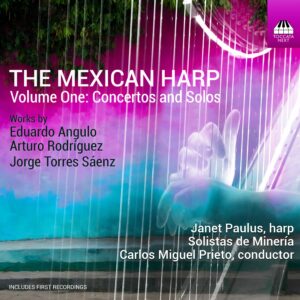
The Mexican Harp Volume One: Concertos and Solos
With this first Toccata Next album of Mexican music for harp, the American harpist Janet Paulus pays tribute to her adoptive country and to three composer friends, each with a concertante work and music for solo harp – several of them recently written for her. The predominant style is gently Neo-Romantic, occasionally animated with echoes of Mexican folk-music.
Janet Paulus, harp
Solistas de Minería (Tracks 2–5, 10-12)
Carlos Miguel Prieto, conductor (Tracks 2-5, 10-12)
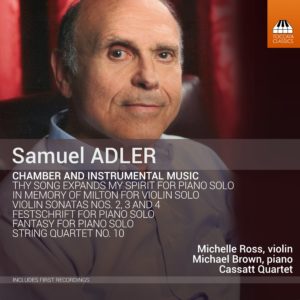
Samuel Adler: Chamber and Instrumental Music
The works of Samuel Adler – born in Mannheim in 1928 but long since one of the leading figures of American music – are both modern and approachable: they blend an edgy angularity with long flights of lyrical melody, and are often informed with both a buoyant charge of energy and an impish sense of humour. This conspectus of his chamber and instrumental music covers almost sixty years of his activity as a composer and thus presents a kind of portrait in sound.
Michelle Ross, violin (Tracks 2–6, 9–11)
Michael Brown, piano (Tracks 1–4, 6–11)
Cassatt Quartet (Track 12)
Muneko Otani and Jennifer Leshnower, violins
Ah Ling Neu, viola
Elizabeth Anderson, cello
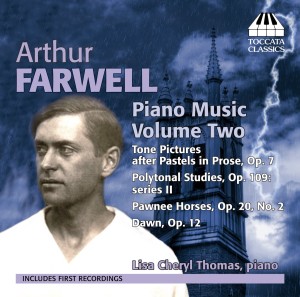
Arthur Farwell: Piano Music, Volume Two
The American composer Arthur Farwell (1872-1952) is remembered as the leading member of a group of 'Indianists' who used Native American tribal melodies. But Farwell's stylistic range was much wider than is realised today. This second CD of his piano music presents not only two Indianist pieces but also the early character-pieces Tone Pictures after Pastels in Prose and the experimental Polytonal Studies, which pit two different keys against each other to generate unusual harmonies.
Lisa Cheryl Thomas, piano
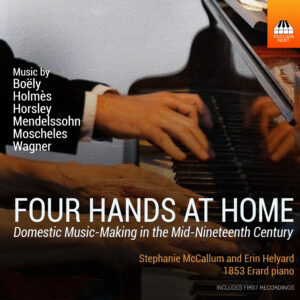
Four Hands at Home: Domestic Music-Making in the Mid-Nineteenth Century
Playing piano four-hands was both vital in the dissemination of music in the nineteenth century and also a popular domestic activity. The original 1853 Parisian Erard piano on which this recording was made demonstrates the clarity, warmth and differentiated timbres characteristic of the ‘straight stringing’ that was later replaced by the ‘cross-stringing’ of the modern concert grand. The repertoire from the period covers the many genres of four-hand piano works in their varied roles as domestic ‘info-entertainment’: orchestral works large and small, serious sonatas and variations, showpieces for emerging virtuosi and even a string quartet are all equally engaging in this once-familiar medium.
Stephanie McCallum (primo) and Erin Helyard (secondo), 1853 Érard Piano
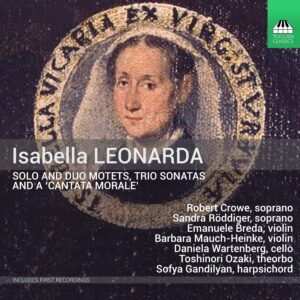
Isabella Leonarda: Solo and Duo Motets, Trio Sonatas and a ‘Cantata Morale’
Isabella Leonarda (1620–1704) was a remarkable woman. At a time when female composers were a rarity, she was both prominent and prolific. Although she was cloistered (literally: she was a nun) in Novara in northern Italy, the dedications of her published compositions show her to have been extremely well connected. And her music demonstrates that she was well aware of the music of contemporaries like Carissimi and Corelli. These facts would be of merely historical importance, were her music not so engaging: although most of the works recorded here are devotional, they are full of buoyant rhythms, colourful textures and a surprisingly dramatic approach to the texts she was setting – many probably written by Leonarda herself.
Robert Crowe, soprano (Tracks 1, 9, 19, 31)
Sandra Röddiger, soprano (Tracks 9, 10, 24, 31)
Emanuele Breda, violin
Sofya Gandilyan, harpsichord
Barbara Mauch-Heinke, violin
Daniela Wartenberg, cello
Toshinori Ozaki, theorbo
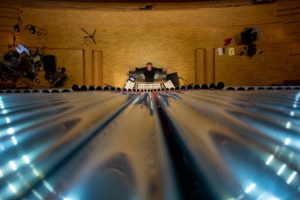
“A Saami Requiem” in Rehearsal
Photographs by Claudius MayWoehl, Woehl-Orgel-Projekte A Saami Requiem A Saami Requiem is an extraordinary meeting-place of musical cultures – western classical, Sámi yoik, Nordic folk-dance, electric rock,…
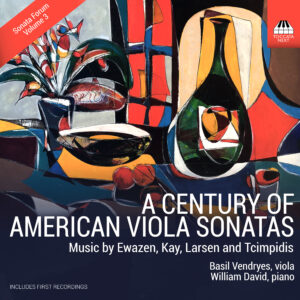
A Century of American Viola Sonatas
These five works – four sonatas and a sonatina – chronicle a century of American writing for the viola and are linked by a concern for directness of musical language. But they also reflect diversity in their origins and inspirations, the Ulysses Kay pieces being written by a pioneering African American, Libby Larsen’s by a successful female freelance composer, Eric Ewazen’s animated by a particularly American lyricism and energy, and the sonata by David Tcimpidis commemorating the ‘9/11’ terrorist attack on the World Trade Center, which Tcimpidis heard unfolding.
Basil Vendryes, viola
William David, piano